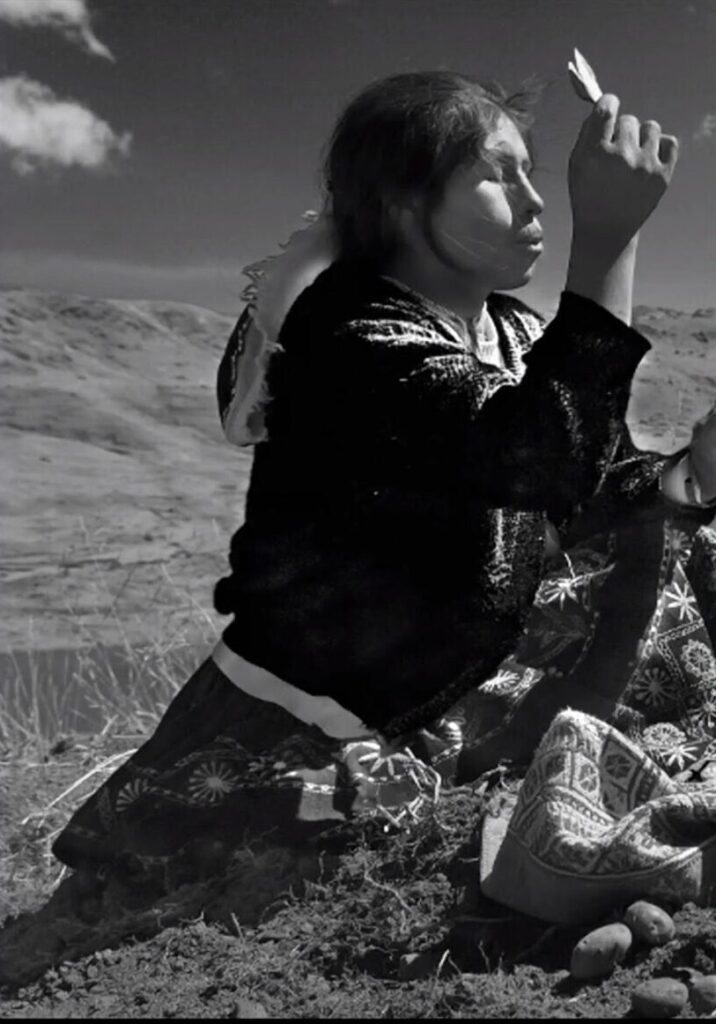
Heritage-Sensitive policies in the Andes, Chaco and Amazonia
Indigenous Perspectives on the Implementation of the Kunming-Montreal Global Biodiversity Framework
Co-organized by Alessandra Manzini (PLACES Lab, CY Cergy Paris Université – SPIRAL Project) and Anne Larson, Gabriela Gonzales et Rocío Vasquez Landscape Alliance CIFOR-ICRAF in action, together with Aj. Marco Haenssgen Chiang Mai University, BA Project; Silvia Hirsch (SALSA); LAST lab, University Ca’ Foscari of Venice and Luca Citarella-Menardi.
this symposium brought together Indigenous representatives, policy researchers, and scholars across Peru, Colombia, Ecuador, Bolivia, and Argentina.
During the international symposium “Heritage-Sensitive Policies in the Andes, Chaco and Amazonia,” held on the 9th of July in Lima, Brasilia, Bogotá, Paris et Buenos Aires, we argue that this recognition, while significant, remains structurally incomplete. Implementation continues to rest on a custodial framing in which Indigenous Peoples are cast as effective managers of biodiversity on behalf of the state or the international community, rather than as ancestral owners exercising inherent authority over their territories.
To unpack how these structural challenges manifest across specific territories, the symposium brought together Indigenous leaders, policy researchers, and environmental scholars. The agenda and presentation recordings below detail these contributions:
VIDEOS REPLAY
1. Welcome and Opening Remarks:
- Speakers: Alessandra Manzini PLACES, CY Cergy Paris University & Gabriela Gonzales Landscape Alliance
- Watch Video: Welcome & Opening Remarks: Framing Indigenous territorial governance, ICCAs, ITTs, and biodiversity conservation
- Sets the analytical framework examining critical perspectives on western conservation models vs. Indigenous stewardship, assembly-based decision making, and rights-based environmental policies.
2. Multi-stakeholder Conservation Dialogues in Peru, Colombia, Ecuador, and
Speaker: Rocío Vasquez (Landscape Alliance)
- Overview of policy translation processes, translating global climate and biodiversity frameworks into regional multi-stakeholder initiatives across Andean-Amazonian contexts.
3. SPIRAL Project in the Andes and Amazonia:
Speakers: Alessandra Manzini (PLACES Lab, CY Cergy Paris Université – SPIRAL Project) in Dialogue with Anne Larson (Governance, Equity and Wellbeing group lead, Landscape Alliance)
- Watch Video: SPIRAL Project in the Andes and Amazonia: Framing the research questions and conceptual themes of the symposium
- Discussion framing heritage-sensitive forest policies, core research questions on governance, equity, and well-being across South American conservation corridors.
4. Indigenous Territorial Governance and Conservation in the Kandozi Territory:
Speaker: Tsanim Wajai Asamat (Representative of the Autonomous Territorial Government of the Wampis Nation – GTA Wampis)
- Insights into autonomous governance structures, territorial self-determination, and community-led monitoring systems protecting riverine and forest ecosystems.
5. Territorial Governance, Forest Stewardship, and Indigenous Conservation in Madre de Dios:
Speaker: Jaime Corisepa Neri (Representative of the Harakbut Nation, Madre de Dios Region)
- Watch Video: Territorial Governance, Forest Stewardship, and Indigenous Conservation in Madre de Dios
- Examination of the Harakbut ancestral territory, spiritual landscapes (e.g., Rostro Arakbut), sacred sites as governance foundations, and legal challenges against extractive pressures.
6. Regenerating the Sierra Nevada de Santa Marta:
Speaker: Luca Citarella Menardi
- Watch Video: Regenerating the Sierra Nevada de Santa Marta: Indigenous-led Conservation and Territorial Governance in Colombia
- Analysis of Indigenous-led ecological regeneration and ancestral governance systems in Colombia’s coastal mountain ecosystems.
7. Reclaiming Ancestral Lands: The Seykun Land Restitution:
Speaker: Walter Sey Izquierdo (Arhuaco Representative)
- Watch Video: Reclaiming Ancestral Lands: Introducing the Arhuaco Struggle through the case of the Seykun land restitution
- Case study on the legal and spiritual efforts of the Arhuaco people to restore ancestral boundaries and land rights within their sacred territory.
8. Moderated Discussion & Audience Q&A:
- Watch Video: Dialogue with first panel of speakers
- Synthesis of panel themes focusing on legal titling, overlap between protected areas and ancestral territories, and local sovereignty.
9. The Ayllu System of Parque de la Patata
Speaker: Alejandro Argumedo (SWIFT Foundation & Asociación ANDES)
- Presentation on the Quechua Ayllu concept, sacred agrobiodiversity management, and spiritual landscape stewardship in the High Andes.
10. Anthropoblind—It Is Not Development:
Speaker: Lygia Fernandes Zamali (Centre for Social Studies, University of Coimbra)
- Watch Video: Anthropoblind—It Is Not Development: The Self-Determination of Peoples as an Instrument of the Sacred
- Critique of development paradigms that ignore non-western relational worldviews and the role of self-determination as a sacred instrument.
11. Communal Uses of the Forest, Livelihoods, and Conservation in the Argentine Chaco
Speaker: Lorenzo Langbehn (Instituto de Estudios para el Desarrollo Social)
- Empirical examination of smallholder communal land use, silvopastoral livelihoods, and forest degradation risks in the Gran Chaco region.
12. Final Discussion and Closing Remarks:
- Watch Video: Rights-based conservation, Indigenous territorial governance, ICCAs, OECMs, and implementation of the Kunming–Montreal Global Biodiversity Framework
- Concluding remarks highlighting actionable recommendations for national biodiversity strategy policies and global rights recognition under the Kunming-Montreal Framework.

This research is supported by the EUTOPIA Science and Innovation Fellowship Programme and funded by the European Union Horizon 2020 programme under the Marie Skłodowska-Curie grant agreement No 945380